St. Patrick’s Day Lucky Charm SVG
A Designer’s First Look: Charm, Clarity, and Craftsmanship
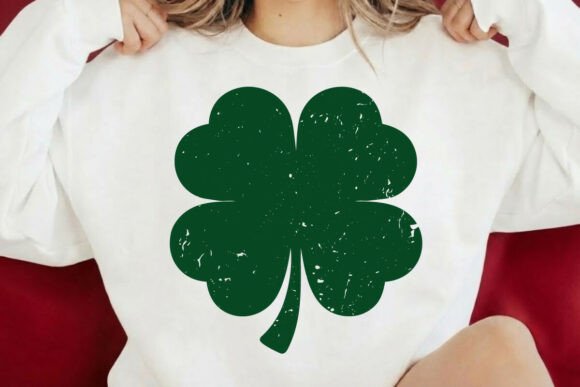
When I opened the St. Patrick’s Day Lucky Charm SVG, my first thought wasn’t “cute” — it was “usable.” As someone who stitches for small shops, Etsy sellers, and local boutiques, I’ve seen too many holiday designs that look sharp on screen but collapse into muddy blobs under thread. This one holds its shape. The clover is bold but not overly detailed — three clean lobes with gentle curves, a subtle stem, and just enough internal line work to suggest dimension without demanding ultra-fine satin stitch. It doesn’t scream “digital clipart”; it reads as intentional, friendly, and quietly confident — exactly the tone you want on a handmade tote bag, an embroidered baby onesie, or a kitchen towel for a St. Paddy’s pop-up shop.
Real Project Test: From Screen to Stitched Tote Bag
Last week, I prepped a custom order for a local café: six canvas tote bags, each with a single St. Patrick’s Day Lucky Charm SVG centered on the front panel. I used the SVG file to generate a clean embroidery digitization (yes — this isn’t a machine-ready file out of the box; it’s a design asset, not a plug-and-play embroidery file). What stood out was how easily the shape translated: no jagged edges, no hidden anchor points, no stray vector nodes that trip up auto-digitizing tools. The 300 DPI PNG held up well when scaled to 4.5 inches wide — crisp at both print and stitch prep stages. On medium-weight canvas, with medium-cutaway stabilizer, the final stitch-out had balanced fill stitch density and clear satin-stitched outlines. Customers didn’t just recognize the symbol — they paused to touch the texture. That’s the difference between decoration and detail.
Where It Shines — And Where It Needs Care
The St. Patrick’s Day Lucky Charm SVG works beautifully on stable, low-stretch fabrics: sweatshirt fleece, twill aprons, cotton tea towels, and structured caps (when placed on flat panels like the front crown). It’s ideal for baby embroidery — the size scales down cleanly to 2.75 inches without losing legibility, and the open shapes avoid dense thread buildup that can irritate sensitive skin. As a tote bag design or sweatshirt embroidery motif, it adds instant holiday warmth without overwhelming the garment.
But be thoughtful in these cases:
- Thin or highly textured fabric: On lightweight linen or burlap, reduce fill stitch density manually — the original vector has no built-in stitch logic, so your digitizer must adjust for fabric behavior.
- Curved surfaces: Avoid placing it across the full curve of a baseball cap visor — the stem and outer edges may distort unless repositioned or simplified.
- Dark fabric backgrounds: The design lacks built-in underlay or shadow layers, so test thread color contrast early — emerald green on black needs brighter top thread than the same design on oatmeal canvas.
- Frequent-wash items: While the shape is durable, tight corners (like where the stem meets the clover base) benefit from reinforced running stitch underlay in your final digitization — especially for personalized gifts or boutique merchandise meant to last.
What It Adds to Your Handmade Product — Beyond the Thread
This isn’t just a graphic — it’s a quiet trust-builder. When a customer sees a clean, balanced St. Patrick’s Day Lucky Charm SVG on a hand-embroidered pillow cover or nursery decor piece, it signals care in selection, not just execution. It supports brand consistency for craft businesses: whether you’re selling on Etsy or at a farmers’ market, this design feels cohesive alongside other seasonal collections — not tacked-on or trend-chasing. Its simplicity makes it gift-ready: no busy background, no dated typography, no visual noise. Just charm, clarity, and quiet confidence. That translates directly to buyer engagement — people remember how something *feels* to hold, not just how it looks online.
Practical Notes Every Embroidery Designer Should Check
Before cutting fabric or uploading to your machine:
- Test on scrap: Run a sample on the exact fabric + stabilizer combo you’ll use — especially if stitching on baby clothes or layered garments.
- Review stitch density in your digitized version: The SVG itself has no stitch data, so confirm fill areas aren’t overloading thin fabrics.
- Check hoop size compatibility: At standard embroidery sizes (3–5 inches), this fits most 4×4 and 5×7 hoops — but verify before batching.
- Inspect small details: Zoom in on the stem junction and clover tips — some auto-digitizers add unnecessary nodes there.
- Mock it in black and white: Use printable mockups to preview how it reads on light vs. dark fabric — thread color choice changes everything.
- Confirm licensing: Since this is sold as a graphics file (EPS/SVG/PNG), double-check usage rights before selling finished embroidered items or bundling it into digital product kits.
Final Thought: A Reliable, Repeatable Asset
The St. Patrick’s Day Lucky Charm SVG won’t win design awards for avant-garde risk — and it shouldn’t. Its strength is reliability. For an Etsy seller launching holiday bundles, a craft fair vendor prepping 50 embroidered patches, or a small shop owner refreshing their spring collection, it’s a grounded, adaptable, professional-grade starting point. It respects the craft — not just the calendar. Used with intention, it becomes more than a holiday motif. It becomes part of your voice.